The Limitations of Conventional Composites
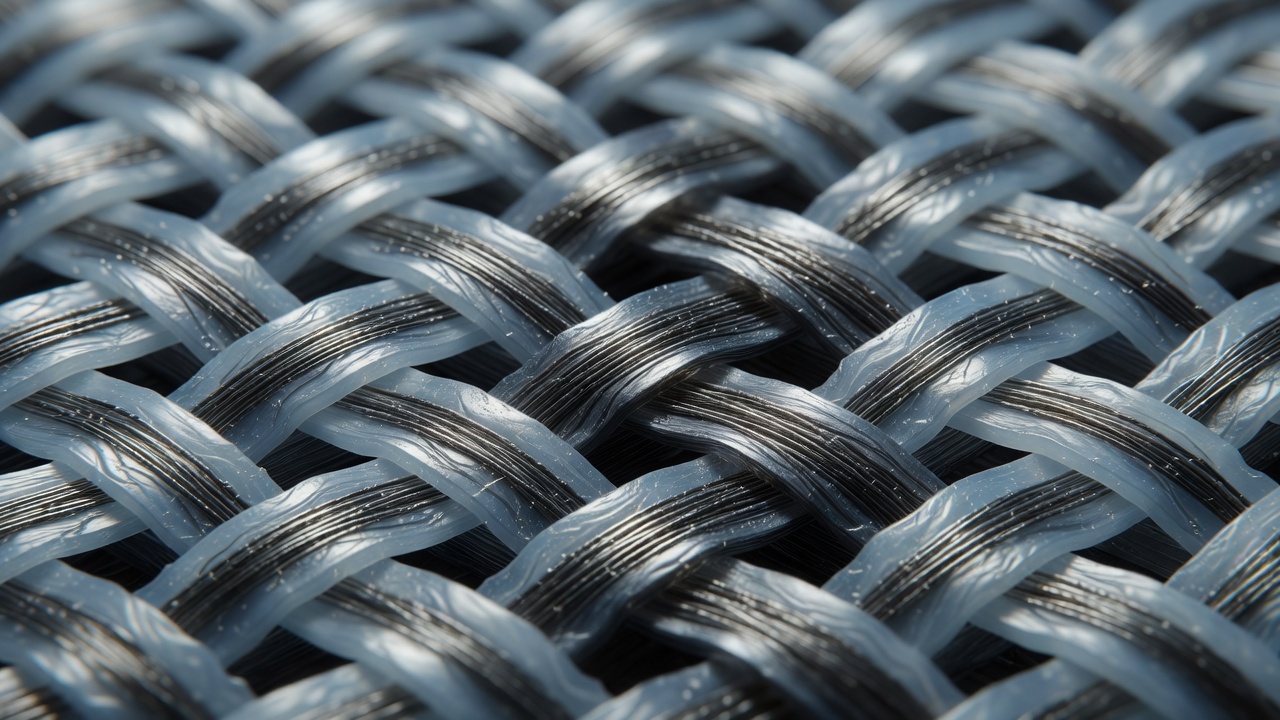
While Carbon Fiber Reinforced Polymers (CFRP) have revolutionized lightweight structural engineering, they present distinct long-term challenges. Conventional carbon fiber is highly reliant on petroleum-based precursors—specifically polyacrylonitrile (PAN)—and thermoset epoxy resins that cannot be easily melted down or reshaped once cured. This makes the traditional manufacturing process energy-intensive and end-of-life recycling extremely difficult.
As the automotive sector transitions toward fully circular economies and stricter carbon accounting, the materials used to build lightweight EVs must evolve. The next generation of composite engineering seeks to maintain the exceptional strength-to-weight ratio of carbon fiber while drastically reducing its environmental footprint.
Bio-Composites and Natural Fibers
One of the most promising avenues for non-structural and semi-structural lightweighting is the utilization of natural fiber composites. Materials such as flax, hemp, and jute exhibit excellent specific stiffness and acoustic damping properties, often rivaling glass fiber equivalents but with a fraction of the mass.
Flax fibers, in particular, have seen implementation in modern motorsport and low-volume performance vehicles. By weaving flax into a structural fabric and binding it with organic bio-resins derived from agricultural waste, engineers can produce body panels, interior trim, and aerodynamic splitters that are practically carbon-neutral. Natural fibers also exhibit a more benign crash profile, splintering without the sharp, dangerous shards characteristic of carbon fiber.
Thermoplastic Resins and Recyclability
To solve the recycling dilemma of primary load-bearing structures, the industry is pivoting from thermoset plastics to thermoplastics. Thermosets undergo an irreversible chemical reaction when cured. Thermoplastics, however, can be reheated, melted down, and remolded multiple times without significant degradation of the polymer matrix.
Integrating continuous carbon fibers into a thermoplastic matrix allows for rapid manufacturing techniques like stamp-forming, which dramatically reduces cycle times compared to traditional resin transfer molding. Crucially, at the end of the vehicle's life, these thermoplastic chassis components can be shredded and melted down, allowing the costly carbon fibers to be reclaimed and reused in injection-molded secondary components, creating a closed-loop supply chain.
Graphene Doping and Nanomaterials
Looking further into the realm of material science, nanomaterials represent the ultimate frontier for lightweighting. Graphene—a single layer of carbon atoms arranged in a two-dimensional honeycomb lattice—is theoretically the strongest material known, vastly outperforming bulk carbon fiber in both tensile strength and electrical conductivity.
While creating macroscopic structures entirely from graphene remains unfeasible, engineers are successfully using it as a "dopant." By dispersing microscopic quantities of graphene nanoplatelets into traditional composite resins, the interlaminar shear strength of a carbon fiber panel can be increased dramatically. This enhancement prevents the layers of carbon fiber from delaminating under stress, allowing designers to use fewer layers of fabric to achieve the same strength. The result is an even thinner, lighter chassis component.
The Shift Toward Multi-Material Architectures
Ultimately, the future of lightweight EV design does not rely on a single "wonder material," but rather on multi-material architectures. Advanced simulation software now allows engineers to map load paths with incredible precision, deploying materials exactly where their specific properties are most beneficial.
A future EV chassis might utilize ultra-stiff, graphene-doped CFRP for the primary safety cell, thermoplastic carbon composites for the crash structures, and acoustic-damping flax bio-composites for the exterior panels. This surgical application of advanced materials ensures that the vehicle remains extraordinarily light, phenomenally rigid, and progressively sustainable.