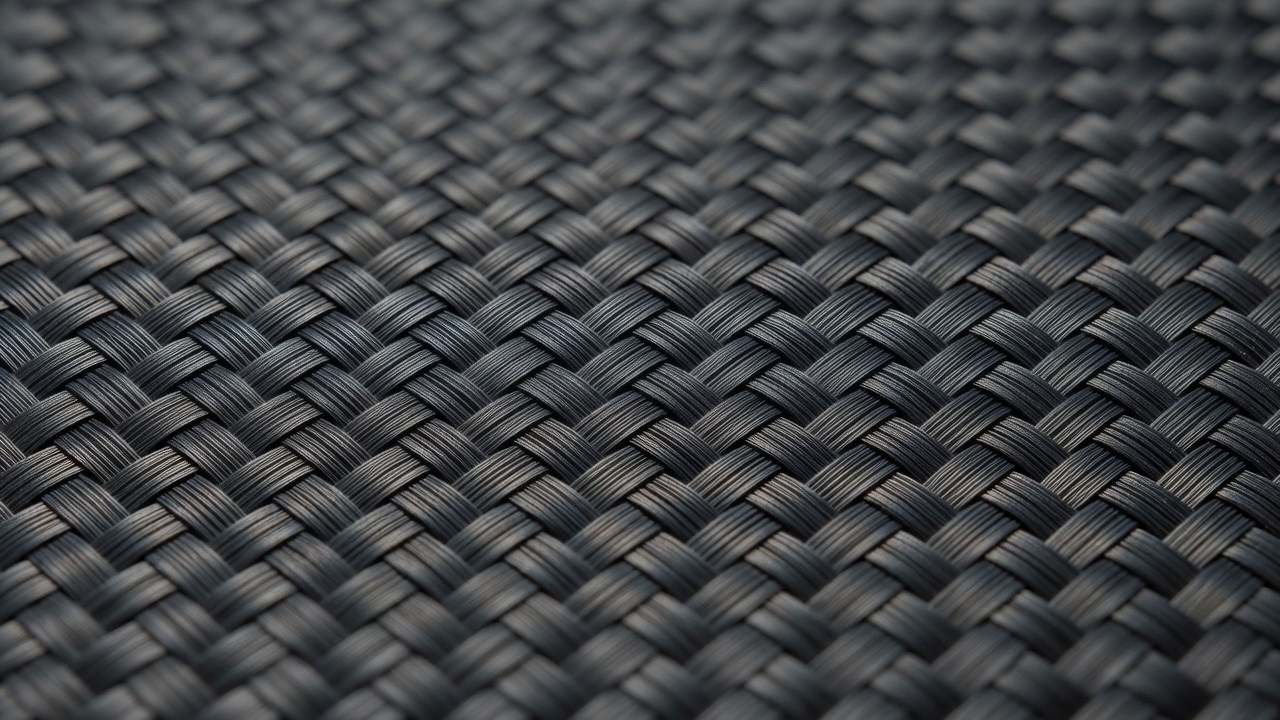
The Fundamental Weight Problem in Electrification
Electric vehicles (EVs) present a unique architectural challenge. The propulsion system—specifically the lithium-ion battery pack—is remarkably dense. Traditional internal combustion engine (ICE) vehicles distribute weight relatively evenly, with the engine, transmission, and fuel tank placed at varied intervals. In contrast, an EV consolidates a massive weight penalty, often exceeding 500 kilograms, squarely within its wheelbase.
To support this centralized mass, traditional engineering dictates a robust, heavy chassis—usually constructed from high-strength steel or thick-walled aluminum extrusions. However, increasing structural mass initiates a vicious cycle: heavier vehicles require more energy to accelerate, larger brakes to decelerate, and stiffer suspension components to manage body roll. This escalating weight limits range and compromises driving dynamics.
Carbon Fiber Reinforced Polymers (CFRP) as the Antidote
Carbon fiber reinforced polymers offer a structural solution without the corresponding weight penalty. Boasting a tensile strength-to-weight ratio significantly higher than that of steel or aluminum, CFRP allows engineers to design chassis structures that are exceptionally rigid yet remarkably light. By substituting metallic alloys with composite materials, automakers can essentially "buy back" the weight of the battery pack.
The primary advantage of CFRP in an EV chassis lies in its anisotropic nature. Unlike isotropic metals, which possess uniform strength in all directions, composites can be precisely engineered. Designers can align the carbon fibers along specific load paths, placing strength exactly where it is required for crash safety and torsional rigidity, while eliminating excess material in low-stress areas.
Manufacturing Methodologies
The transition of carbon fiber from bespoke motorsport applications to broader EV production relies heavily on the evolution of manufacturing techniques. Traditional processes, while producing high-quality components, are largely incompatible with the throughput required for high-volume automotive assembly.
- Pre-Preg Layup: The traditional motorsport standard. Sheets of carbon fiber pre-impregnated with resin are manually laid into molds and cured in an autoclave under high heat and pressure. While offering the highest structural performance, the cycle times are measured in hours, and the labor costs are prohibitive for all but the most exclusive hyper-EVs.
- Resin Transfer Molding (RTM): A process where dry carbon fiber preforms are placed into a closed metal mold, and liquid resin is injected under high pressure before curing. RTM significantly reduces cycle times compared to autoclaving and yields excellent surface finishes, making it increasingly viable for mid-volume EV platforms.
- Sheet Molding Compound (SMC): Utilizing chopped carbon fibers mixed with resin in a pliable sheet. This material can be compression-molded rapidly. While it does not offer the continuous load paths of woven textiles—resulting in lower ultimate strength—it is highly effective for complex, non-structural, or semi-structural EV components, bridging the gap between performance and mass manufacturing.
Crash Structures and Energy Dissipation
Beyond static rigidity, an EV chassis must excel in dynamic impact scenarios. The central battery pack is highly sensitive to intrusion; a breach during a collision can result in thermal runaway. Therefore, the chassis must dissipate kinetic energy efficiently before it reaches the cell modules.
Carbon fiber exhibits unique energy absorption characteristics. In a high-speed impact, metallic structures yield, bend, and fold to absorb energy (crumple zones). Carbon fiber, conversely, absorbs energy through controlled macroscopic fragmentation—crushing and splintering into thousands of pieces. When engineered correctly, composite crash structures can absorb significantly more energy per kilogram than steel or aluminum.
The Economic and Environmental Equation
The widespread adoption of CFRP in EV chassis design is not without friction. The primary barrier remains cost. The energy-intensive process of creating the raw polyacrylonitrile (PAN) precursor and oxidizing it into carbon fiber keeps raw material prices high. Furthermore, the specialized tooling required for RTM or automated fiber placement demands substantial initial capital expenditure.
Environmentally, the life-cycle analysis of carbon fiber EVs is complex. While lightweighting reduces energy consumption during the vehicle's operational phase (lowering grid demand), the manufacturing of virgin carbon fiber is highly carbon-intensive. Consequently, the industry is increasingly focused on developing closed-loop recycling methods for CFRP, aiming to reclaim fibers from end-of-life chassis components using pyrolysis or solvolysis techniques, thereby reducing the environmental impact of next-generation EV structures.